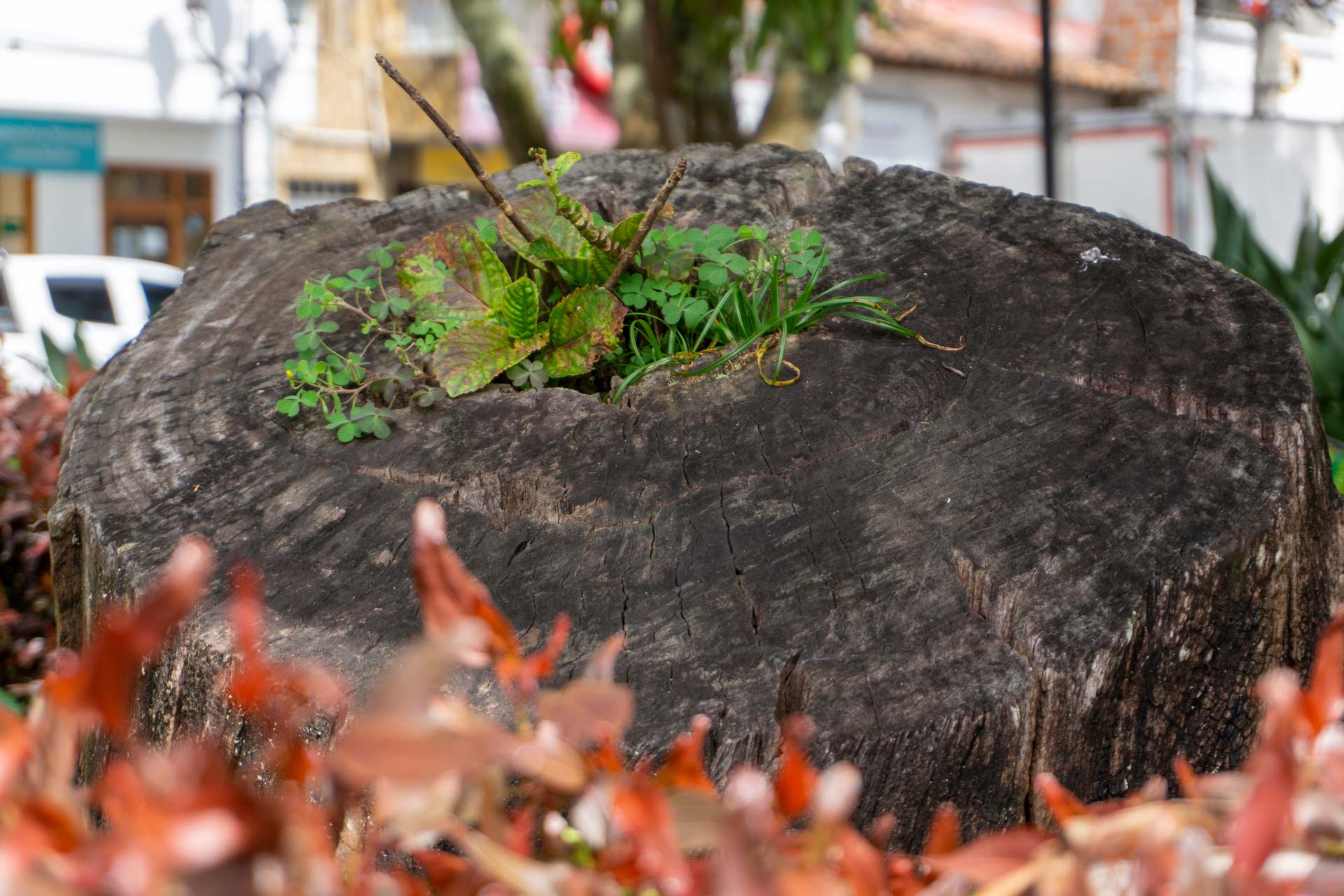
Cutting down a tree doesn’t always mean the tree is completely gone. In most yards, the visible trunk is removed, but the stump and root system are still very much alive for a while. Some homeowners are surprised to see fresh green shoots popping up around an old stump weeks or even months after the tree was cut.
If that has happened on your property, it doesn’t necessarily mean anything was done wrong. In many cases, it’s a normal biological response. A tree stump can continue trying to survive after cutting, especially if the root system still has stored energy and the species is known for aggressive regrowth. Homeowners researching stump removal Vancouver WA are often trying to understand whether cutting the tree solved the problem or only changed how it shows up. Learning why that happens can help you decide what to do next and what kind of follow-up work may solve this issue.
NW Tree Service: Why Do Some Tree Stumps Start Growing Again?
When a tree is cut down, the root system doesn’t immediately shut off. Roots can still hold moisture, nutrients, and stored carbohydrates the tree built up while it was alive. If the stump remains intact, that stored energy may begin pushing out new shoots in an effort to keep the tree alive.
That regrowth is only possible if part of the stump’s vascular system is still active. Just beneath the bark is a layer called the cambium, which plays a key role in new growth. After a tree is cut, dormant buds hidden under that layer can reactivate. The energy stored in the roots helps feed those buds until new leaves form and begin producing food through photosynthesis.
In other words, this is the tree’s survival response. Instead of shutting down completely, it redirects its remaining energy into new sprouts from the stump, the base, or even nearby roots. Homeowners can sometimes notice clusters of thin shoots circling the stump or popping up a short distance away in the lawn.
A common question in NW tree service conversations is why this happens on one property but not another. The answer usually comes down to the tree species, the condition of the stump, the timing of the cut, and how much of the root system is still alive.
Some species are much more likely to sprout after cutting (such as Willows, Poplars/Cottonwoods, Maples, Oaks, Elms, Black Locust, Tree-of-Heaven, and Ash), while others are less persistent. Younger, healthier trees also tend to have more stored energy than older or declining ones, which can make chances of regrowth more likely.
Why Regrowth Happens More With Certain Tree Species
Not all stumps behave the same way. Some are much more determined than others. Broadleaf trees are often more likely to send up sprouts than many conifers. Depending on the species, a stump may produce repeated regrowth until the root system finally runs out of stored energy.
In the Pacific Northwest, this can be especially frustrating on properties where fast-growing or invasive vegetation is already a problem. A stump that looks inactive may suddenly put out new shoots during a warm, wet stretch of weather.
This is one reason people researching stump removal Vancouver WA often want to know whether cutting alone is enough. In some cases, it is. In others, it only removes the visible part of the problem while leaving the stump ready to respond and regrow.
Why Cutting a Tree Is Different From Removing the Stump
Tree cutting and stump removal are two different things. Cutting removes the standing portion of the tree. The stump and much of the root structure may remain in place. If the stump stays healthy enough to support regrowth (or they have more energy stored in their root systems), new shoots can emerge even though the original trunk is gone.
A cut tree may be down, but a living stump may still be active. What changes after removal is that the tree loses its main base for re-sprouting. Once the stump is properly addressed, the chance of ongoing regrowth usually drops significantly.
Homeowners looking into stump removal Vancouver WA are often trying to solve one of three issues: repeated sprouting, an unusable patch of yard, or the worry that the area isn’t truly finished after tree cutting.
Stump Removal Vancouver WA: What Changes After the Stump Is Addressed
When the stump is removed or ground down, the site usually becomes much easier to manage. The tree loses its main point of regrowth, and the yard becomes easier to level, landscape, mow, or replant. That doesn’t always mean every root disappears immediately, but it does effectively change the situation.
Here is what usually changes after stump removal:
- First, the chance of fresh shoots decreases because the stump is no longer there to fuel repeated sprouting in the same way.
- Second, the area becomes more usable. A leftover stump can interfere with mowing, planting, patio work, and general yard cleanup.
- Third, the property looks more finished. Even a low stump can make a yard feel incomplete or neglected, especially after the rest of the tree has been removed.
For many homeowners, stump removal Vancouver WA is less about appearance alone and more about ending the cycle of regrowth and making the area practical again.
What Homeowners Should Watch For After a Tree Is Cut
If a tree has recently been removed, it helps to keep an eye on the stump area for a while. Regrowth doesn’t always start immediately. In some cases, shoots appear within a few weeks. In others, they show up the next growing season.
Watch for:
- green shoots emerging from the top or sides of the stump
- small suckers appearing in a ring around the stump
- shoots coming up through the lawn from shallow roots
- continued activity during warm or wet weather
These signs suggest the root system still has energy left. That doesn’t necessarily mean the growth will continue forever, but it does mean the stump is not fully inactive yet.
NW tree service decisions should be based on what you want the space to do next. If you’re planning to leave the area natural, a stump may be less urgent. If you want a clean lawn, planting bed, or finished landscape, regrowth can become an ongoing nuisance.
When a Sprouting Stump Becomes More Than a Minor Annoyance
At first, stump sprouts may seem harmless. They are small, thin, and easy to ignore. However, over time, they can turn into a repetitive maintenance issue. Homeowners may keep cutting them back, only to see new ones come in again.
That cycle is frustrating because trimming the shoots doesn’t always solve the root problem. It only removes the latest growth. If the stump remains viable, it may continue trying to push out more shoots.
In this case, expectations matter. If the goal is to fully move on from the tree, repeated sprouting is usually a sign that cutting alone wasn’t the complete solution.
What a Sprouting Stump Is Really Telling You
A tree stump can sprout back after cutting because the root system may still be alive and trying to survive. That response is common, especially with certain species and healthy root systems that still have stored energy.
The most important takeaway is that tree cutting and stump removal do different jobs. Cutting removes the trunk. Removal changes what happens next. If a stump is sending up shoots, it’s usually a sign that the underground system is still active, even if the tree above ground is gone.
Understanding that helps homeowners make better decisions about cleanup, landscaping, and what level of closure they actually want after a tree comes down.